Atsugi Karate dojo
Okinawa Karate Goju-Ryu & Kobudo
 Inter National Karatedo Kobudo Union.....YUZENKAI H.Q. since1985 →Japanese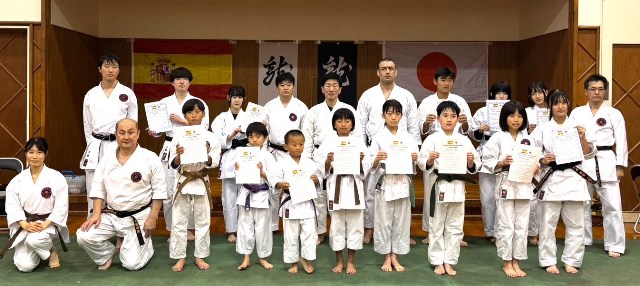
Updated: Feb.1, 2026
For inquiries, visits, or trial sessions, feel free to contact us at:
socrates@toki.waseda.**
Please add “jp” after the final dot before sending your email.
News
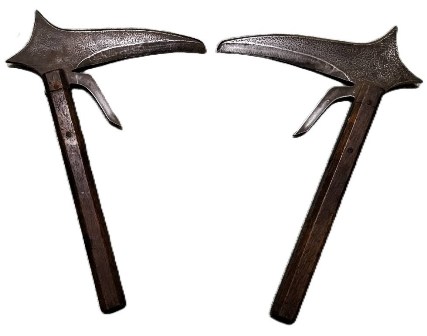
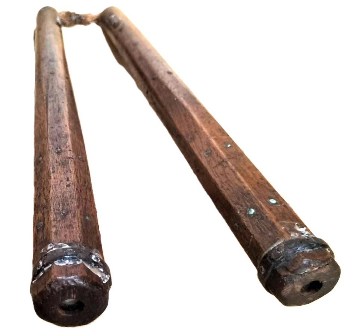
8/1/2026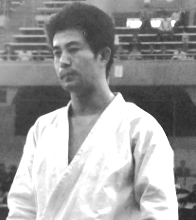 On January 8, we received two karate weapons cherished by our founder, Shihan Isamu Kato (1941–2023), from his family: a pair of nicho‑gama and a nunchaku. These are custom‑made, combat‑ready pieces from the 1960s. Because of their significant historical value, we have posted a detailed report on our international page.
21/12/2025
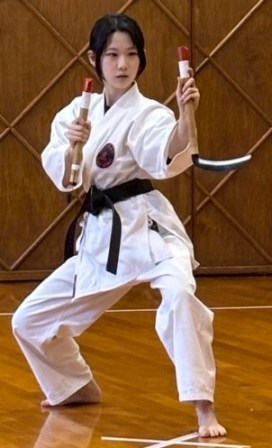 Ms. Nayuru Sakuta passed the examination for 3rd Dan.
In addition, she successfully passed the required kata and kumibo (paired applications of weapon kata) for tonfa and kama, and was also awarded 3rd Dan in Ryukyu Kobudo.
She has been promoted to Shihan-dai (Assistant Instructor).
 She is the first female Shihan-dai to master kata and their applications
(kumibo) in all six weapons:
She is the first female Shihan-dai to master kata and their applications
(kumibo) in all six weapons:
bo, sai, nunchaku, nunti, tonfa, and kama.
**Table of Contents**
1. Dojo Policy
2. Training Days
→ Training Schedule (January–March)
3. Instructional Guidelines and Safety Considerations
4. Fees (Annual Fee, Monthly Fee)
5. Required Karate Uniform and Protective Equipment
6. Up to First Dan
7. Black Belt Study Group
8. About the Style
9. Recent News
10. International Exchange — From Atsugi to the World
11. Members’ Links
☆ World YUZENKAI
☆ Photo Gallery
1 Dojo Policy
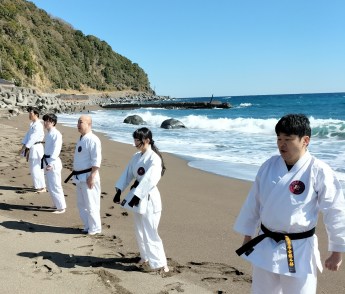
We teach Goju-Ryu Karate (Okinawan Goju-Ryu) as a traditional Japanese martial art and a practical full-body exercise.
Our training focuses on posture, breathing, balance, and safe movement.
Beginners are welcome, and students of all ages and backgrounds are accepted.
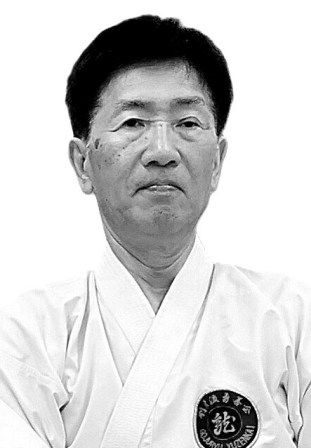 Profile of Kancho
Kazunori Omoto
With 52 years of experience in karate, he is a retired teacher of a prefectural high school, where he taught history, geography, and civics, and served as the advisor to the karate club, coaching many students to award‑winning results.
Committed to international exchange and global contribution, he currently serve as the Director (Kancho) of the World Yuzankai, the International Goju-Ryu Karate Kobudo Union Yuenkai,which has branches in 11 regions across 9 countries.
In the spring of 2026, his book “Comprehensive Study on Traditional Karate Goju‑Ryu” will be published in the United States.
video clip 150sec. 2025ver.
2.Training Days
Training Schedule (November to January)
Students train 1 to 3 times per week by choosing from options ①, ②, and ③, depending on their personal circumstances
(school, other lessons, family schedules, etc.)
① Saturday 19:00–21:00
Group training.
Locations: Nan-Mouri Sports Center or Nan-Mouri Community Center.
Depending on availability, Higashi-cho Sports Center may also be used.
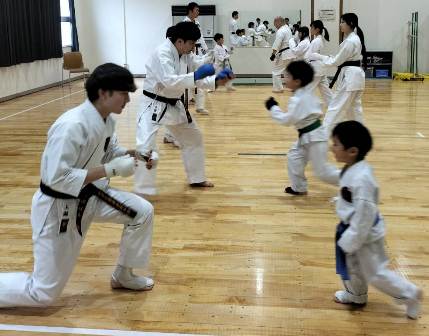
② Wednesday 17:00–19:00
Individual instruction.
Locations: Atsugi-Minami Community Center (5-minute walk from the Hon-Atsugi station), or Kita Community Center (15-minute walk), or Nan-Mouri Community Center.
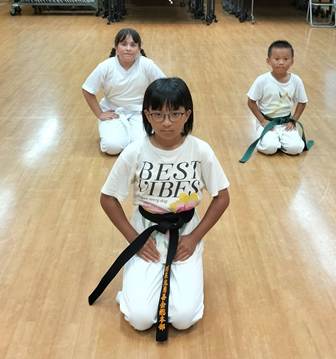
③ On-site instruction (visiting lesson)
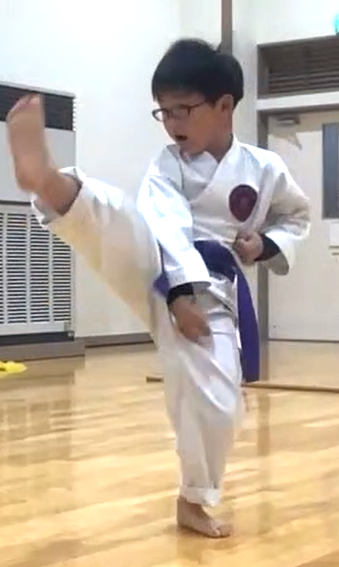
Families reserve a nearby community center, and instruction is provided at the requested date and time.
Example community centers:Atsgi-Minami、Mutsuai-minami、Mutsuai-nishi
Atsugi-kita、Aiko、Midorigaoka、Nan-Mouri、 Koayu、Tamagawa
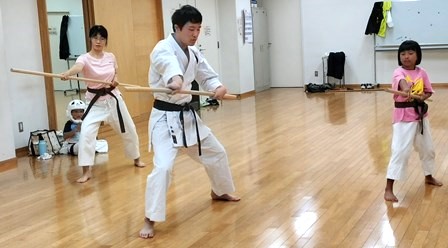
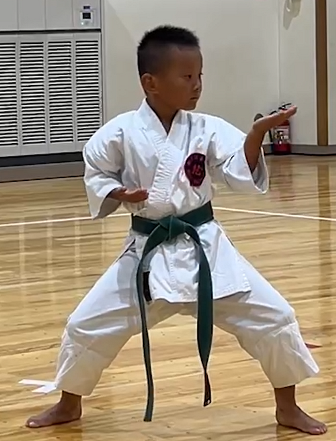
◎Children can start training from kindergarten age (around 4–5 years old).
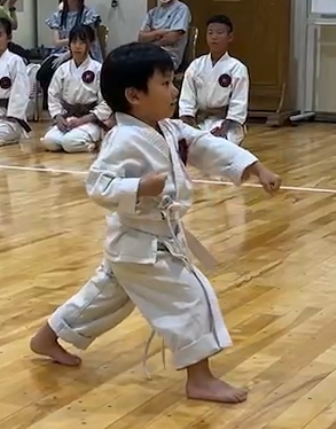
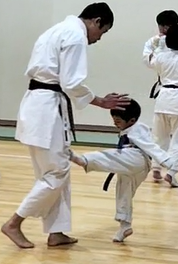
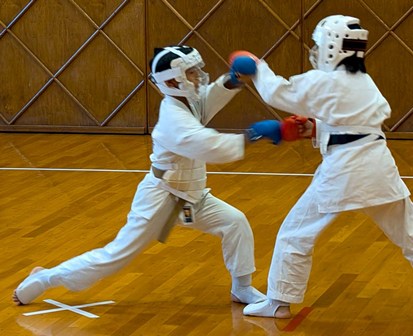
◎Elementary school students train through karate as an ideal full-body exercise suited to their growth period.
Basic techniques are emphasized first, with kata and kumite practiced in a well-balanced manner.
◎ For junior high and high school students, karate provides a meaningful activity beyond school clubs.
Students can continue training while balancing club activities and part-time work.


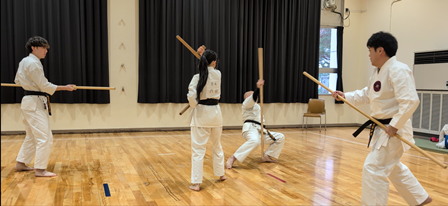
◎ Adults practice karate as a lifelong martial art, focusing on fundamentals and traditional kata,
while also training in Okinawan Kobudo.

☆ Feel free to contact us by email for dojo visits or trial training.
contact :
socrates@toki.waseda.**
Please add “jp” after the final dot before sending your email.
3.Instructional Considerations
◎ Keeping expenses as low as possible
◎ Emphasis on accident prevention (the Dojo Director has completed AED training 13 times)
◎ A clear and structured curriculum
◎ Video content provided for review and preparation
◎ Attendance and training progress shared through a private website
◎ Academic and career guidance based on experience as a high school teacher
4.Fees (Fiscal Year 2026)
◎ Annual Fee: 5000 yen
(covers facility usage fees and consumable supplies)
※ Membership applications submitted by March 2026 will receive a waiver of the 2025 annual membership fee.
◎ Monthly Fee: 2,000 yen
※ Children in 1st grade or younger: flat rate 1,000 yen
※ Second family member: 500 yen discount (not applicable to children in 1st grade or younger)
◎ No enrollment fee and no federation membership fees
5.Required Karate Uniform and Protective Equipment
Please come to your trial session in
comfortable clothing suitable for exercise.
If you decide to continue, please prepare the items listed below.
It is perfectly fine to purchase affordable options online or elsewhere.
For young children who grow quickly, expensive or brand‑name items are not necessary.
karate uniform (traditional kata type): approx. 7,000 yen
※ If ordered through the dojo, a 20–30% discount is available
Yuzenkai chest patch: 600 yen
Fist protectors (with thumb protection): approx. 2,200 yen
Leg protectors (shin protection): approx. 2,600 yen
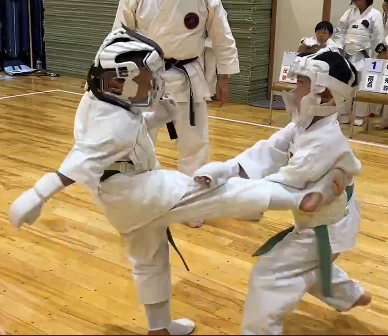
From around 6th–7th kyu, free sparring training begins and protective gear is required(face guard and body protector).
Face guard1 (recommended option 1): approx. 9,400 yen
Face guard2 約9000円(recommended option 2): approx. 7,000 yen
Face guard (recommended option 3): approx. 5,000 yen
Body protector: approx. 6,000 yen
6.Up to Black Belt (1st Dan)
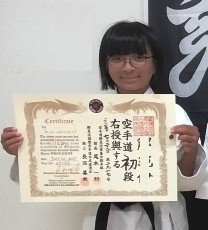
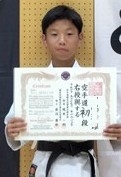
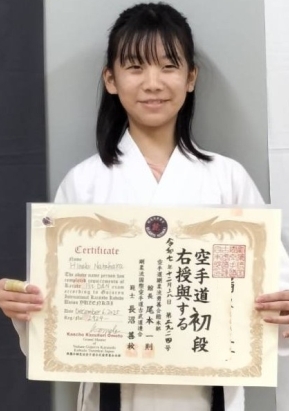
In 2025, three elementary school students earned their black belts.
If a student starts training in 3rd or 4th grade of elementary school,
trains twice a week, and progresses steadily, reaching black belt (1st Dan)
in about three years is typical (individual differences apply).
For students in 4th grade or below, due to limits related to physical and mental development,
the rank awarded is Junior 1st Dan (black belt).
After promotion to 5th grade, progress is reviewed and the rank is converted to full 1st Dan.
Students transferring from other dojos due to relocation or similar reasons
will begin from the rank they have already obtained
7.Black Belt Study Group
Once a month, a four-hour session is held on Sunday.
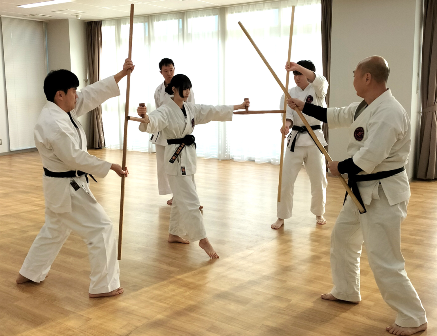
Participants study Okinawan Kobudo (traditional weapons), including kata and kumibo,
as well as classical Goju-Ryu kata, to deepen their understanding of traditional techniques
8.About the Style(Ryu-Ha)
Karate is not a single, uniform art.
There are many different styles, including karate originating in Okinawa,
karate developed on mainland Japan, and karate influenced by other combat sports such as kickboxing.
Our dojo practices Okinawa Goju-Ryu Karate,a style with a proud history and deep tradition rooted in Okinawa, the birthplace of karate.
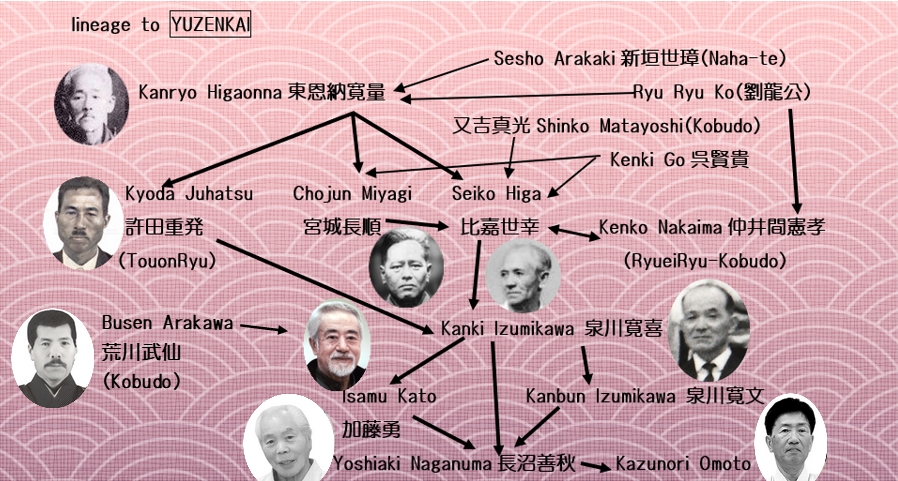
Yuzenkai Founder Featured in a International Research Publications on Karate


Shihan Isamu Kato,Shihan Yoshiaki Naganuma →Reference (External Website)
Contact
socrates@toki.waseda.**
Please add “jp” after the final dot before sending your email.
News 2/12/2025
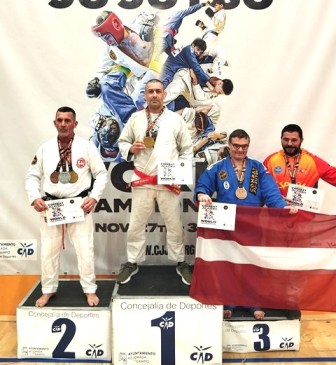
Shihan Josep of Yuzenkai Spain competed in the Masters Division at the World Mixed Martial Arts Championship held in Madrid on November 29.
He won first place in all three categories: Mixed Martial Arts, Full-Contact Karate, and Ground Fighting.

10/11/2025
 A 7-minute digest video of recent Okinawan Kobudo (karate weapons) demonstrations has been released.
The video features kata and kumibo (paired applications) for nunchaku, kama, nunti, sai, tonfa, and bo.
Unarmed techniques and weapon techniques have traditionally been trained together as the two complementary aspects of karate.
Tap the logo to watch the video.
News 11/10/2025
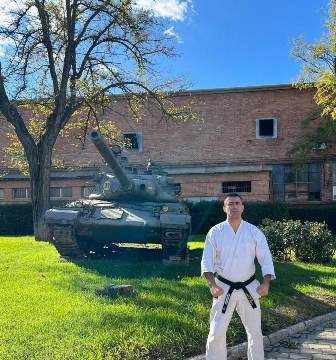 Yuzenkai Spain has become an affiliated dojo of the Karate Unit at a Spanish Army base in Madrid.
The idea of a dedicated karate unit within the military naturally sparks great interest,
and this partnership is a great honor for Yuzenkai.
The person on the far right in the photo below is Shihan Josep of Yuzenkai Spain.
He visited Atsugi for the second time one year ago.
News 3/9/2025
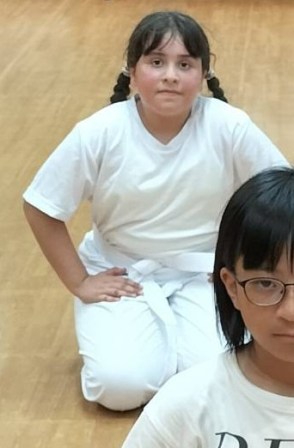 A new member from Iran (3rd grade elementary school).
Welcome to the dojo!
News 24/8/2025
Yuzenkai 40th Anniversary Commemorative Celebration
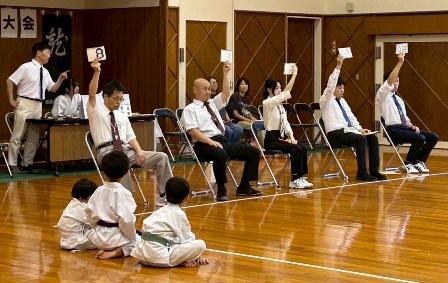
10.International Exchange — From Atsugi to the World
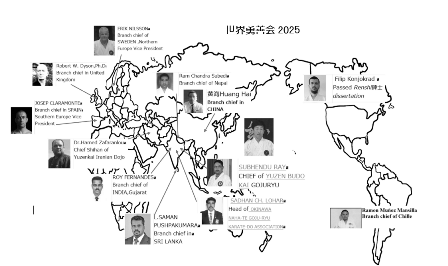
March 2026: “Comprehensive Study on Traditional Karate Goju-Ryu” to be published in the United States
December 2024: The Head of the Spain Branch visited Atsugi.

May 2019: The Head of the Sweden Branch visited Japan again.
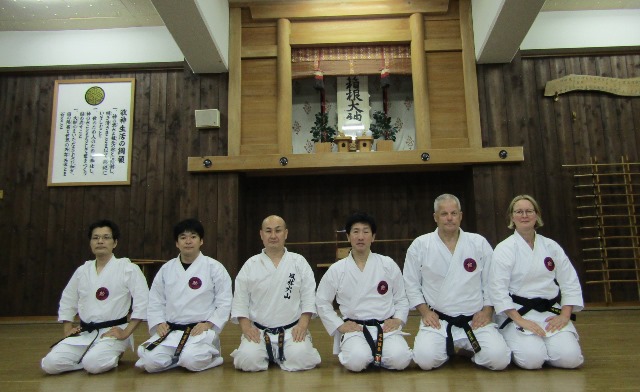
November 2018: Training and instruction conducted by the Head of the China Branch.
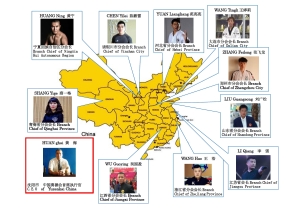
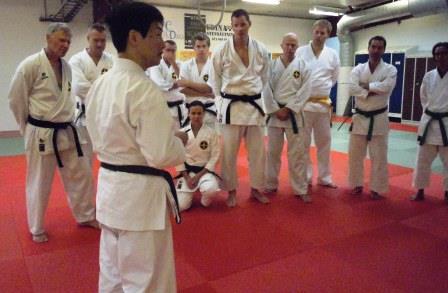
August 2016: A training seminar was held in Sweden.
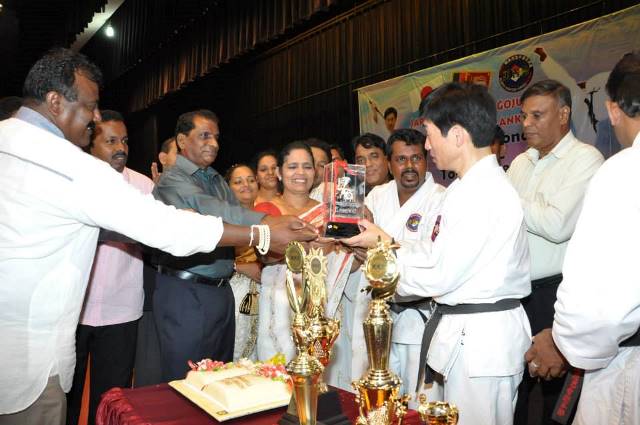
August 2015: The 1st South Asia Karate Championships (hosted by Yuzenkai Sri Lanka).
Okinawa Karate Goju-Ryu & Kobudo
Inter National Karatedo Kobudo Union.....YUZENKAI H.Q. since1985 →JapaneseUpdated: Feb.1, 2026
For inquiries, visits, or trial sessions, feel free to contact us at:
socrates@toki.waseda.**
Please add “jp” after the final dot before sending your email.
News
8/1/2026
On January 8, we received two karate weapons cherished by our founder, Shihan Isamu Kato (1941–2023), from his family: a pair of nicho‑gama and a nunchaku. These are custom‑made, combat‑ready pieces from the 1960s. Because of their significant historical value, we have posted a detailed report on our international page.21/12/2025
Ms. Nayuru Sakuta passed the examination for 3rd Dan.In addition, she successfully passed the required kata and kumibo (paired applications of weapon kata) for tonfa and kama, and was also awarded 3rd Dan in Ryukyu Kobudo.
She has been promoted to Shihan-dai (Assistant Instructor).
She is the first female Shihan-dai to master kata and their applications
(kumibo) in all six weapons:bo, sai, nunchaku, nunti, tonfa, and kama.
**Table of Contents**
1. Dojo Policy
2. Training Days
→ Training Schedule (January–March)
3. Instructional Guidelines and Safety Considerations
4. Fees (Annual Fee, Monthly Fee)
5. Required Karate Uniform and Protective Equipment
6. Up to First Dan
7. Black Belt Study Group
8. About the Style
9. Recent News
10. International Exchange — From Atsugi to the World
11. Members’ Links
☆ World YUZENKAI
☆ Photo Gallery
1 Dojo Policy
We teach Goju-Ryu Karate (Okinawan Goju-Ryu) as a traditional Japanese martial art and a practical full-body exercise.
Our training focuses on posture, breathing, balance, and safe movement.
Beginners are welcome, and students of all ages and backgrounds are accepted.
Profile of Kancho Kazunori Omoto
With 52 years of experience in karate, he is a retired teacher of a prefectural high school, where he taught history, geography, and civics, and served as the advisor to the karate club, coaching many students to award‑winning results.
Committed to international exchange and global contribution, he currently serve as the Director (Kancho) of the World Yuzankai, the International Goju-Ryu Karate Kobudo Union Yuenkai,which has branches in 11 regions across 9 countries.
In the spring of 2026, his book “Comprehensive Study on Traditional Karate Goju‑Ryu” will be published in the United States.
video clip 150sec. 2025ver.
2.Training Days
Training Schedule (November to January)
Students train 1 to 3 times per week by choosing from options ①, ②, and ③, depending on their personal circumstances
(school, other lessons, family schedules, etc.)
① Saturday 19:00–21:00
Group training.
Locations: Nan-Mouri Sports Center or Nan-Mouri Community Center.
Depending on availability, Higashi-cho Sports Center may also be used.
② Wednesday 17:00–19:00
Individual instruction.
Locations: Atsugi-Minami Community Center (5-minute walk from the Hon-Atsugi station), or Kita Community Center (15-minute walk), or Nan-Mouri Community Center.
③ On-site instruction (visiting lesson)
Families reserve a nearby community center, and instruction is provided at the requested date and time.
Example community centers:Atsgi-Minami、Mutsuai-minami、Mutsuai-nishi
Atsugi-kita、Aiko、Midorigaoka、Nan-Mouri、 Koayu、Tamagawa
◎Children can start training from kindergarten age (around 4–5 years old).
◎Elementary school students train through karate as an ideal full-body exercise suited to their growth period.
Basic techniques are emphasized first, with kata and kumite practiced in a well-balanced manner.
◎ For junior high and high school students, karate provides a meaningful activity beyond school clubs.
Students can continue training while balancing club activities and part-time work.
◎ Adults practice karate as a lifelong martial art, focusing on fundamentals and traditional kata,
while also training in Okinawan Kobudo.
☆ Feel free to contact us by email for dojo visits or trial training.
contact :
socrates@toki.waseda.**
Please add “jp” after the final dot before sending your email.
3.Instructional Considerations
◎ Keeping expenses as low as possible
◎ Emphasis on accident prevention (the Dojo Director has completed AED training 13 times)
◎ A clear and structured curriculum
◎ Video content provided for review and preparation
◎ Attendance and training progress shared through a private website
◎ Academic and career guidance based on experience as a high school teacher
4.Fees (Fiscal Year 2026)
◎ Annual Fee: 5000 yen
(covers facility usage fees and consumable supplies)
※ Membership applications submitted by March 2026 will receive a waiver of the 2025 annual membership fee.
◎ Monthly Fee: 2,000 yen
※ Children in 1st grade or younger: flat rate 1,000 yen
※ Second family member: 500 yen discount (not applicable to children in 1st grade or younger)
◎ No enrollment fee and no federation membership fees
5.Required Karate Uniform and Protective Equipment
Please come to your trial session in
comfortable clothing suitable for exercise.
If you decide to continue, please prepare the items listed below.
It is perfectly fine to purchase affordable options online or elsewhere.
For young children who grow quickly, expensive or brand‑name items are not necessary.
karate uniform (traditional kata type): approx. 7,000 yen
※ If ordered through the dojo, a 20–30% discount is available
Yuzenkai chest patch: 600 yen
Fist protectors (with thumb protection): approx. 2,200 yen
Leg protectors (shin protection): approx. 2,600 yen
From around 6th–7th kyu, free sparring training begins and protective gear is required(face guard and body protector).
Face guard1 (recommended option 1): approx. 9,400 yen
Face guard2 約9000円(recommended option 2): approx. 7,000 yen
Face guard (recommended option 3): approx. 5,000 yen
Body protector: approx. 6,000 yen
6.Up to Black Belt (1st Dan)
In 2025, three elementary school students earned their black belts.
If a student starts training in 3rd or 4th grade of elementary school,
trains twice a week, and progresses steadily, reaching black belt (1st Dan)
in about three years is typical (individual differences apply).
For students in 4th grade or below, due to limits related to physical and mental development,
the rank awarded is Junior 1st Dan (black belt).
After promotion to 5th grade, progress is reviewed and the rank is converted to full 1st Dan.
Students transferring from other dojos due to relocation or similar reasons
will begin from the rank they have already obtained
7.Black Belt Study Group
Once a month, a four-hour session is held on Sunday.
Participants study Okinawan Kobudo (traditional weapons), including kata and kumibo,
as well as classical Goju-Ryu kata, to deepen their understanding of traditional techniques
8.About the Style(Ryu-Ha)
Karate is not a single, uniform art.
There are many different styles, including karate originating in Okinawa,
karate developed on mainland Japan, and karate influenced by other combat sports such as kickboxing.
Our dojo practices Okinawa Goju-Ryu Karate,a style with a proud history and deep tradition rooted in Okinawa, the birthplace of karate.
Yuzenkai Founder Featured in a International Research Publications on Karate
Shihan Isamu Kato,Shihan Yoshiaki Naganuma →Reference (External Website)
Contact
socrates@toki.waseda.**
Please add “jp” after the final dot before sending your email.
News 2/12/2025
Shihan Josep of Yuzenkai Spain competed in the Masters Division at the World Mixed Martial Arts Championship held in Madrid on November 29.
He won first place in all three categories: Mixed Martial Arts, Full-Contact Karate, and Ground Fighting.
10/11/2025
A 7-minute digest video of recent Okinawan Kobudo (karate weapons) demonstrations has been released.The video features kata and kumibo (paired applications) for nunchaku, kama, nunti, sai, tonfa, and bo.
Unarmed techniques and weapon techniques have traditionally been trained together as the two complementary aspects of karate.
Tap the logo to watch the video.
News 11/10/2025
Yuzenkai Spain has become an affiliated dojo of the Karate Unit at a Spanish Army base in Madrid.The idea of a dedicated karate unit within the military naturally sparks great interest,
and this partnership is a great honor for Yuzenkai.
The person on the far right in the photo below is Shihan Josep of Yuzenkai Spain.
He visited Atsugi for the second time one year ago.
News 3/9/2025
A new member from Iran (3rd grade elementary school).Welcome to the dojo!
News 24/8/2025
Yuzenkai 40th Anniversary Commemorative Celebration
10.International Exchange — From Atsugi to the World
March 2026: “Comprehensive Study on Traditional Karate Goju-Ryu” to be published in the United States
December 2024: The Head of the Spain Branch visited Atsugi.
May 2019: The Head of the Sweden Branch visited Japan again.
November 2018: Training and instruction conducted by the Head of the China Branch.
August 2016: A training seminar was held in Sweden.
August 2015: The 1st South Asia Karate Championships (hosted by Yuzenkai Sri Lanka).
- →Back to top
Contact - socrates@toki.waseda.**
Please add “jp” after the final dot before sending your email. - copyright©2021 YUZENKAI KARATEDO all rights reserved. (Unauthorized use of images and videos on this site is prohibited)